GAS FLUSH IN MODIFIED ATMOSPHERE PACKAGING
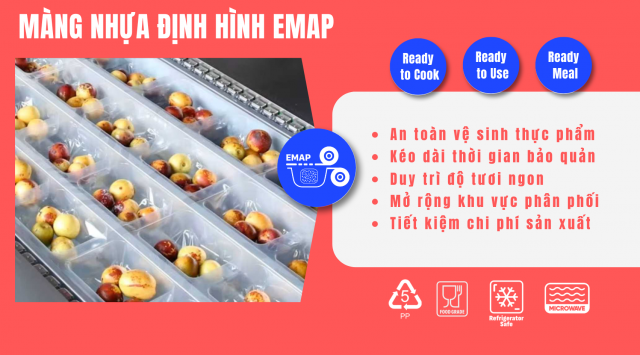
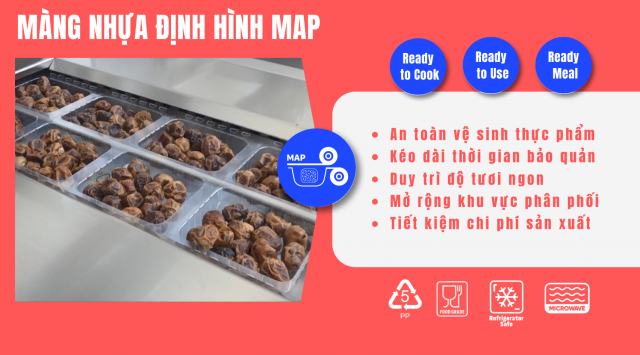
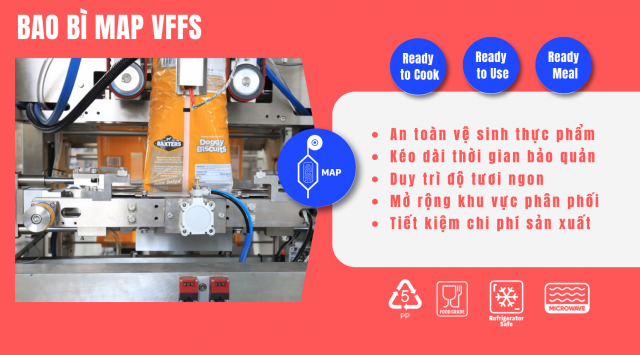
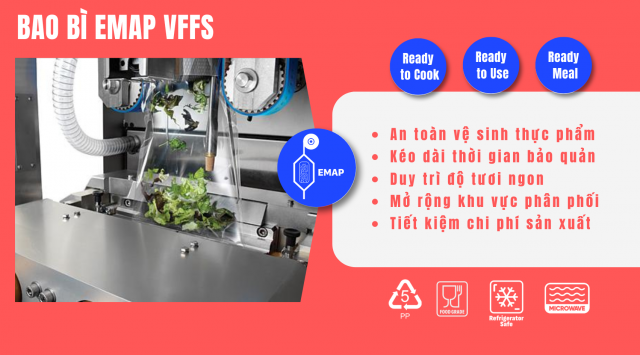
When modifying the atmosphere inside of a package, the amount of oxygen can typically be reduced to 3% or less. Inert gases used for MAP are typically denser than oxygen. As such, the oxygen inside the package is forced out of the package. This results in extended product shelf life, product integrity, protection against discoloration, and for products like chips, a cushion-like buffer against damage.
Many gas flush applications require sophisticated gas mixtures. Case ready meat applications are a good example of a sophisticated gas mixture which requires a nitrogen, carbon dioxide and carbon monoxide mixture (Tri-Gas). Nitrogen is an inert gas that functions to fill the headspace in the package. Carbon dioxide is added for its antimicrobial properties and carbon monoxide stabilizes the typical red or pink color of air-exposed meat.

CARBON DIOXIDE (CO2)
Carbon dioxide is colourless, odourless and tasteless. It has an oxidation-inhibiting and growth-inhibiting effect on most aerobic bacteria and moulds. The gas is frequently used to increase the shelf life of food. Generally speaking, the higher the level of CO2 in the package, the longer the achievable shelf-life. However, CO2 is readily absorbed by fats and water - therefore, most foods will absorb CO2. Excess levels of CO2 in MAP can cause flavor tainting, drip loss and pack collapse. It is important, therefore, that a balance is struck between the commercially desirable shelf-life of a product and the degree to which any negative effects can be tolerated. When CO2 is required to control bacterial and mold growth, a minimum of 20% is recommended. The use of supporting or filling gases can slow down this effect.
OXYGEN (O2)
Oxygen essentially causes food to spoil due to oxidation and forms the ideal preconditions for aerobic microorganisms to grow. As a result, oxygen is frequently excluded from modified atmosphere packaging. In some cases – typically red meat – processing is deliberately carried out with high oxygen concentrations, in order to prevent the red colour from becoming ‚pale, and to inhibit the growth of anaerobic organisms.
Generally, oxygen should be excluded but there are often good reasons for it to be present in controlled quantities including:
• Maintain fresh, natural color (in red meats for example)
• To maintain respiration (in fruit and vegetables)
• To inhibit the growth of aerobic organisms (in some types of fish and in vegetables)
NITROGEN (N2)
Nitrogen is an inert gas and owing to its production process, is typically relatively high purity. It is usually used for displacing air, especially atmospheric oxygen, in food packaging. This prevents the oxidation of food and inhibits the growth of aerobic microorganisms. It is frequently used as a supporting or filling gas, as it diffuses very slowly through plastic films and hence remains longer in the packaging. It is also used as a balance gas (filler gas) to make up the difference in a gas mixture, to prevent the collapse of packs containing high-moisture and fat-containing foods, caused by the tendency of these foods to absorb carbon dioxide from the atmosphere. For modified atmosphere packaging of dried snack products 100% nitrogen is used to prevent oxidative rancidity.
CARBON MONOXIDE (CO)
Carbon monoxide is a toxic, colorless, odorless, flammable gas. Results have shown that the use of carbon monoxide (CO) in MAP with high levels of CO2 has resulted in increased shelf-life together with retention of the bright red color of meat cuts. It is also claimed that carbon monoxide can effectively reduce or inhibit different spoilage and pathogenic bacteria. It is sometimes used to retain the red colour of, primarily, meat. The required concentrations are very low. In some countries, including the EU, the use of carbon monoxide for modified atmospheres is nonetheless prohibited in foods.
ARGON (AR)
Argon has the same properties as nitrogen. It is a chemically inert, tasteless, odorless gas that is heavier than nitrogen and does not affect micro-organisms to any greater degree. It is claimed to inhibit enzymic activities, microbial growth and degradative chemical reactions. Hence it can be used in a controlled atmosphere to replace nitrogen in most applications. Its solubility (twice that of nitrogen) and certain molecular characteristics give it special properties for use with vegetables. Under certain conditions, it slows down metabolic reactions and reduces respiration. Due to the marginal effects and the higher price compared to nitrogen, its use is rather rare.